
How Construction Companies in Abu Dhabi Ensure Structural Safety in Every Project

Safety is the key to all the building projects. In Abu Dhabi, where grandiose skylines collide with overly strict regulatory requirements, building companies have to strike a balance between design innovativeness, fast development pace, and structural safety that is in no way compromised. Whether a high-rise commercial tower, villa or a project that aims at ensuring every structure, be it a tower, villa or an infrastructure, is safe throughout the design, build till hand over, is a precise, multidisciplinary and ever evolving process.
In this blog we’ll explore how a typical construction Company Abu Dhabi structures its approach to safety, the standards and practices they follow, the technologies they use, and the cultural and managerial systems that make safety a living, enforced priority on every site.
1. Strong regulatory framework and compliance
Abu Dhabi follows an elaborate legal and regulatory framework that regulates the safety of buildings. Codes, approvals, inspections and certification procedures are established by local agencies, including Abu Dhabi Municipality and the Department of Transport (to deal with infrastructure). In all projects, construction teams start by harmonizing the designs to these codes such as structural loads, seismic loads, wind loads, material specifications and fire prevention provisions. Preliminary compliance reduces the expensive rework and also ensures that the safety is incorporated into the project as early as the initial drawing.
The dedicated top construction firms in Abu Dhabi will have compliance officers and will also work with regulators during construction and design. They also prepare documents needed to facilitate permits and approvals, and they even schedule inspections at key milestones to make sure that they comply with the code before proceeding to the next phase.
2. Rigorous design and engineering review
The drawing board is the first place to begin safety. Structural engineers conduct rigorous analyses of structures both classically and by the use of sophisticated finite element models, to ensure that all beams, columns, slabs and foundations can support expected load, including live loads, dead loads, environmental loads and extraordinary loads such as those of the construction equipment.
Design review processes include:
- Peer reviews by independent structural engineers.
- Value-engineering sessions that assess how design changes impact safety and performance.
- Coordination between structural, mechanical, electrical and plumbing teams to avoid conflicts that could compromise integrity (for example, cutting through a load-bearing element for ducts or services).
Big companies and focused construction Company Abu Dhabi organizations usually need third-party examinations of significant buildings, which can incorporate an additional aspect of unbiased checks that can lessen the chances of scrutiny.
3. Material quality and testing
The quality of the materials is all that makes them safe. The construction projects in Abu Dhabi are based on highly material specifications and on-site testing programs that maintain concrete, steel, and aggregates to be of the required standards. Regular tests like compressive strength of concrete, tensile tests of steel and chemical tests where applicable are done in in-house or third party laboratories.
Typical material control measures include:
- Approved supplier lists and traceability systems so every batch can be tracked back to origin documents.
- Sampling and testing schedules aligned with project milestones (e.g., cylinder breaks for concrete at 7, 14, and 28 days).
- Non-destructive testing (NDT) techniques, like ultrasonic testing or radiography, for welds and critical steel connections.
Through stringent material acceptance standards, construction teams are able to avoid the incorporation of poor quality components in the structure. High-level BIM tools are essential in the construction project management Abu Dhabi that guarantee safe sequencing and coordination.
4. Skilled workforce and continuous training
Unsafe design may be defeated by poor construction. There is a need to have skilled labor and competent supervisors. Workforce development by construction companies is carried out in the form of certified training programs, inductions at the workplace, and competency tests. Training on specific tasks includes the use of the best practices in formwork erection, concrete placement, safe lifting operations, and working at height.
In addition to technical skills, soft-skill training (communication, reporting, hazard recognition) will allow site personnel to detect and report safety-related issues at the earliest stage. Behavioral safety programs are also conducted by many firms in order to foster the atmosphere in which employees constantly embrace safe practices and look after each other.
5. Robust site safety management systems
The supportive infrastructure of a site is a robust safety management system. These systems involve written policies, roles and responsibilities, risk assessments, method statements, permit-to-work systems and every day safety briefings (toolbox talks).
Key elements include:
- Job Hazard Analyses (JHAs) that identify specific hazards for tasks and prescribe controls.
- Permit systems for high-risk activities such as hot works, excavation, confined space entry, and heavy lifting.
- Routine inspections and audits to monitor compliance with procedures and identify unsafe conditions or behaviors.
An efficiently managed construction company Abu Dhabi will have been making use of digital systems to record inspections, non-conformancies, corrective measures and near-miss reports- transforming information into continuous improvement.
6. Advanced construction techniques and engineering controls
Modern construction employs engineered controls that reduce risk rather than relying solely on personal protective equipment (PPE). Examples include:
- Prefabrication and modular construction, which shifts complex assembly to controlled factory environments where quality control and safety are easier to manage.
- Temporary propping and shoring systems designed by engineers to maintain structural stability during phased works.
- Engineered fall protection systems—guardrails, safety nets, and lifeline anchors—installed as part of the work sequence.
Adoption of such techniques reduces the number of high-risk activities performed on-site and improves both efficiency and safety.
7. Heavy lifting and equipment management
Crane operations and heavy lifting are the most safety-sensitive processes of construction sites. Businesses handle them through stern lifting schedules, certified rigging personnel and frequent equipment checks. The qualified engineers come up with lifting plans and specify the load weights, center of gravity, lift path, selection of sling, and contingency plans.
Maintenance regimes of cranes, hoists, scaffolds and earth moving equipment are also included under equipment management. Preventative maintenance and pre-use inspection mean that machinery becomes predictable and without any surprises that might present itself through failure, which is potentially hazardous to both the structure and to the employees.
8. Earthworks and foundation safety
The basis of structural safety is its foundations. The foundation design, and methods of construction depend on geotechnical investigation. The construction teams adhere to guidelines on groundwater management, soil stabilization, dewatering system, and safe slope of an excavation or shoring.
Inclinometers and settlement gauges can be incorporated as monitoring systems to monitor the ground movements during and after construction. The excessive movement is quickly picked by engineering solutions to save the integrity of the structure.
9. Quality assurance and construction supervision
Quality control (QC) and Quality assurance (QA) is necessary. QA emphasizes the systems which positively confirm the existence of the right processes whereas QC checks the outputs -inspections, tests as well as acceptance standards. Specific quality assurance/quality control units conduct stepwise inspection at critical points: formwork alignment prior to concrete pours, reinforcement placement checks, concrete compaction checks, and post-pour curing checks.
The site engineers and supervisors are senior people with powers to stop the work when non-conformances are detected. This stop-work authority is a very important cultural and procedural control that stops unsafe or poor practices.
10. Monitoring, instrumentation, and structural health checks
Instrumentation is applied in large and complex construction projects to measure the structural behavior during the construction and in some cases in the service life of the building. Strain, displacement, temperature and vibration can be monitored using sensors. Dating back, load cells may be used to check the loads on temporary supports, and tiltmeters may be used to detect unforeseen rotation in tall buildings.
Projects near to existing structures are particularly important to be monitored continuously as during construction, the project might influence the foundations of neighboring structures or utilities. The information obtained allows the engineers to act before they fail rather than after failure.
11. Fire safety and life-safety integration
The structural safety is strongly connected to the life-safety mechanisms, such as fire protection. Structural layouts are synchronized with fire-rated elements, escape routes, stair cores and sprinkler systems by design teams. Structural members have fire resistance requirements to ensure that the load bearing capacity remains during fire exposure that gives the occupants time to evacuate and to give the firefighters time to respond.
Fire risk during the construction process is reduced on-site through on-site fire watches, safe storage of flammable material, and control of hot-work. After handover, built structures are also tested in regard to the fire and smoke control systems, which is a way of guaranteeing the integrated safety performance.
12. Environmental and sustainability considerations
Environmental controls are also used to ensure structural safety by mitigating the risks of corrosion, water infiltration, and material decay. The climatic condition of Abu Dhabi with heat and humidity along the coasts in certain areas necessitates special care on corrosion prevention of steel and the right depth of concrete covering as well as application of additives or finishing materials that will prolong its life.
Green design options, like the use of durable materials and strong detailing, minimization of future maintenance and ensuring of the structural integrity throughout the life of the building.
13. Emergency preparedness and incident response
However strong the planning may be, incidences may arise. The construction firms put emergency plans in place, which are dependent on site hazards. These involve evacuation procedures, local emergency service coordination, confined space or height rescue trained rescue teams and evacuation procedures. Simulations and drills are used to test preparedness such that in case an event takes place, preparedness is organized and efficient to respond accordingly.
Incident investigations follow the “root cause” approach to identify systemic failures and implement corrective actions that prevent recurrence—a key element of continuous improvement. End-to-end construction services Abu Dhabi providers integrate safety planning into every phase of development.
Conclusion
Structural safety of all projects in Abu Dhabi is a multi-dimensional undertaking. It is a combination of strict regulation and design, craft and manufacture of high quality, contemporary engineering controls and surveillance, competent and safety conscious workforce and management. Good results and great ones are differentiated by a proactive approach, i.e. the anticipated and engineered out of the process potential issues and a mature safety culture.
For developers and clients, choosing a construction company Abu Dhabi that proves to be proficient in all the above areas documented QA/QC systems, accredited engineers, clear safety records, and innovation commitment guarantees an investment is safe. When the technical, managerial and human components of safety are incorporated into the construction teams in a proper manner, the outcome of the whole process is more than a stable building: it is a strong asset that will be occupant and community safe over the decades.
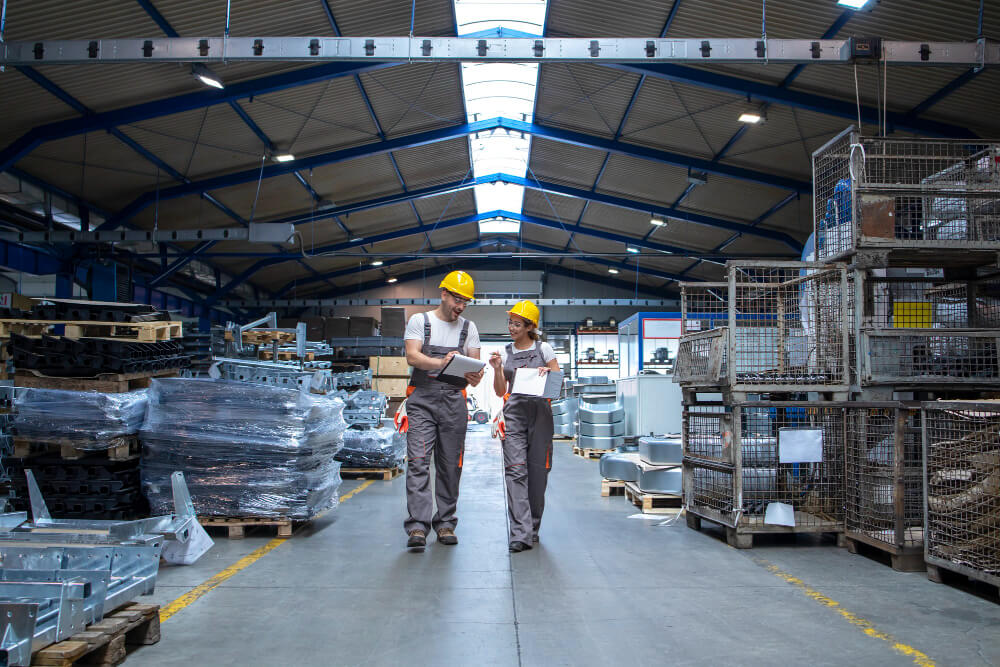
Construction Company Abu Dhabi for Villas & Commercial Buildings
Tags: Construction Company Abu Dhabi, Top Construction Companies in Abu Dhabi, Building Construction Company Abu Dhabi, Civil Construction Company Abu Dhabi, General Construction Company Abu Dhabi, Villa Construction Company Abu Dhabi, Infrastructure Construction Company Abu Dhabi, Local Construction Company Abu Dhabi, Abu Dhabi Construction Contractors